Grid plan to smartly connect 11 utilities across 5 states

December 8, 2011 by Paul Dvorak
Filed under Business issues, Utility Grid, Wind Power News

IBM, once known for main frame computers, now wants to be known for building smarter cities. That will start with a smarter power grid.
Software that lets a utility in Washington cut power consumption by up to 50% will soon get a big test. This demonstration is part of a project that will attempt to knit together aging and fragmented grid infrastructure across five states and 11 utilities. The project will involve 95 smaller efforts to integrate wind power, store power from the grid, accommodate electric-vehicle charging, and establish “microgrids” that can survive on their own in the event of a power outage.
The software for the $178-million project is nearly complete (as of Nov 2011) and the system is predicted to be up and running by Nov 2012, says Ron Ambrosio, team research leader for the energy and utilities industry at IBM, one of several organizations involved. The project is one of 16 smart grid demonstrations funded in part by the 2009 Recovery Act.
Some of the technology got a trial run on Washington state’s Olympic Peninsula in 2005 to 2007. The technology let utilities communicate with smart thermostats and other equipment at residences, reducing peak electricity demand and responding to fluctuations in supply from intermittent resources such as wind turbines.
Ordinarily, such a system would depend on changes in regulations to let utilities charge residential customers different prices for electricity depending on demand. But the devices developed by IBM, the Pacific Northwest National Lab, and others, makes such real-time pricing unnecessary.
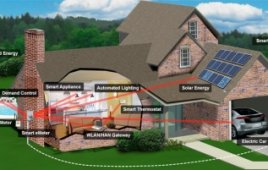
The approach keeps electricity rates flat and gives customers rebates on their power bills in exchange for having thermostats and other smart devices hooked up to communicate with the utility. The utility signals smart thermostats and appliances regarding how much it costs the utility to provide it electricity. Then, based on consumer
preferences, the smart systems signals back to the utility regarding how much power they will use. For instance, when Summer power costs are high, the thermostat might signal that it will let the internal how temperature rise to reduce air conditioning costs.
When the system was tested on the Olympic Peninsula, it reduced electricity demand during peak times by an average of 15%. During one period of particularly tight power supply, consumption dropped 50%. Consumers trimmed electric bill by about 10%.
One concern the demonstration will address, says Ambrosio, is the potential development of feedback loops that can make the system unstable. The concern is that such interactive devices in 60,000 homes over five large western states could cause unexpected fluctuations in demand that power generators can’t keep up with.
IBM
www.ibm.com
H2 generator stabilizes utility grid
August 21, 2011 by Paul Dvorak
Filed under Electrical Systems, Transmission, Wind Power News

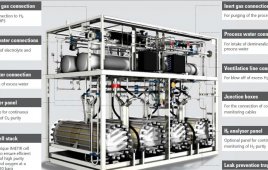
The industrial electrolyzer from Hydrogenics is capable of 60 m-cu./hr at STP.
A developer and manufacturer of hydrogen generation and fuel-cell products says it has completed a trial with Ontario’s Independent Electricity System Operator (IESO) demonstrating the viability of its electrolyzer for utility-scale grid stabilization.
During the trial period, the load from a Hydrogenics’ HyStat electrolyzer provided frequency regulation in Ontario by responding to power regulation signals from the IESO on a second-by-second basis. Using an electrolyzer currently installed at Hydrogenics’ corporate HQ, the IESO and Hydrogenics worked together to demonstrate how the hydrogen equipment follows regulation signals in a real-world scenario. In doing so, Hydrogenics demonstrated better balancing of electrical supply and demand while alleviating local transmission constraints. “We are glad to showcase the smart energy grid capability of utility-scale hydrogen technology, which will be used for grid stabilization and energy storage. We will apply these lessons towards the development of megawatt-scale energy storage applications,” said Daryl Wilson, President and CEO.
Hydrogenics Corp.
www.hydrogenics.com
More ideas for the smart grid
July 6, 2011 by Paul Dvorak
Filed under Policy, Transmission, Wind Power News

DOE initiatives include a nonprofit organization, Grid 21, that will promote new smart-grid technologies to consumers, a student competition aimed at improving energy efficiency at home, and more.
Secretary of Energy Steven Chu has announced new initiatives to support development of the smart grid. He also warned that the country is not doing enough to get the grid ready for renewable energy. He acknowledged that privacy concerns are making some utility customers wary of recent smart meters, which are a key component of the smart grid.
The initiatives include a nonprofit organization, Grid 21, that will promote new smart-grid technologies to consumers, a student competition aimed at improving energy efficiency at home, a series of meetings about Recovery Act smart-grid projects, and a “rapid-response team” to speed reviews of energy-transmission projects. The Department of Agriculture also announced $250 million in loans for rural grid development.
In 10 to 20 years, Secretary Chu sees solar power costing $0.06 to $0.07/kWh making it competitive with fossil fuels. Once that happens, he said, there will be a boom in solar panel installations that may strain the grid.
Solar energy presents a challenge for utilities because output fluctuates with the sun’s position and clouds. Utilities must actively manage the fluctuations, especially in neighborhoods with large numbers of solar panels or electric vehicles that need charging, to ensure that the right voltage levels are maintained and power doesn’t go out.
Renewable sources of energy will also require new transmission lines, especially since some of the windiest or sunniest places are far from large cities, where power is needed most.
Dept of Energy
www.DOE.gov
$50 million Smart Grid initiative for research and demo projects

March 28, 2011 by Windpower Engineering
Filed under Wind Power News
Executives from the Ontario Clean Technology Alliance attended the 2011’s Energy, Utility & Environment Conference in Phoenix to invite environmental technology companies from around the world to participate in the Province of Ontario’s clean technology revolution. The Canadian province offers North America’s most advanced green energy policies, targeted incentives and a generous Feed-in Tariff (FIT) Program to expansion-minded clean technology companies.
The Ontario Power Authority’s FIT Program, modeled after successful programs in Germany and France, features North America’s first comprehensive, guaranteed pricing structure for renewable electricity production, offering stable prices under long-term contracts for solar photovoltaic, on-shore and off-shore wind, biomass, biogas, landfill gas, and waterpower energy.
Early 2011, Ontario launched a $50 million Smart Grid initiative for research, capital, and demonstration projects. A Smart Grid will put in place modern grid infrastructure required to help homeowners monitor and control their energy usage through home automation and allow smart charging of electric vehicles. Ontario’s Smart Grid initiative is open for business to attract companies from around the world offering complimentary technologies.
“Ontario’s Long-Term Energy Plan is on track to eliminate coal by 2014. In 2009 emissions from the electricity sector reached the lowest they have been in 45 years and more than 80% of our generation came from emissions-free sources like wind, water, solar, biogas and nuclear. But there’s more to do, and we’re open for business to help us get the job done,” says an Alliance spokesman.
Ontario is home to 110 head offices of clean technology companies predominantly engaged in development, marketing, and use of their proprietary technology to deliver products or services that reduce or eliminate negative environmental impacts. Sustainable Development Technology Canada projects that by 2015, these Ontario clean technology companies will generate revenues in excess of $1 billion. In addition there are more than 2,800 environmental industry companies in Ontario, generating approximately $7 billion in revenue and employing 65,000 people.
Ontario Clean Technology Alliance
www.ontariocleantechalliance.com
Fed identifies five sets of standards for Smart Grid
October 27, 2010 by Paul Dvorak
Filed under Policy, Utility Grid, Wind Power News
The Commerce Department’s National Institute of Standards and Technology (NIST) has advised the Federal Energy Regulatory Commission (FERC) that it has identified five “foundational” sets of standards for Smart Grid interoperability and cyber security that are ready for consideration by federal and state energy regulators. The standards, produced by the International Electrotechnical Commission (IEC), focus on the information models and protocols important to efficient and reliable grid operations as well as cyber security.
In a letter to FERC Chairman Jon Wellinghoff, NIST’s national coordinator for Smart Grid interoperability, George Arnold, said the standards “are essential to uniform and interoperable communication systems throughout the grid and will accommodate the evolution of the grid and the integration of new technologies.”
In the Energy Independence and Security Act (EISA) of 2007, Congress directed NIST to coordinate development of communication protocols and other standards to achieve an interoperable Smart Grid —a nationwide electric power system that allows transmission of energy and information. Under EISA, once it has sufficient consensus, FERC is charged with instituting rulemaking proceedings to adopt the standards necessary to ensure Smart Grid function.
Five families of IEC standards will advance efforts to achieve efficient and secure intersystem communications, among other FERC priorities identified in the commission’s July 16, 2009, Smart Grid Policy Statement. These standards will be updated as Smart Grid requirements and technologies evolve.
The standards and their functions are:
IEC 61970 and IEC 61968: Provide a Common Information Model necessary for exchanges of data between devices and networks, primarily in transmission (IEC 61970) and distribution (IEC 61968) domains.
IEC 61850: Facilitate substation automation and communication as well as interoperability through a common data format.
IEC 60870-6: Facilitate information exchanges between control centers.
IEC 62351: Address cyber security of the communication protocols defined by the preceding IEC standards.
To determine whether a standard was ready for consideration by regulators, NIST took a number of factors into account, including the maturity of the standard, the resolution of previously identified issues by its Smart Grid Interoperability Panel, and a satisfactory review of cyber security requirements.
The five IEC standards were among the 25 Smart Grid-relevant standards identified as “ready for implementation” in the NIST Framework and Roadmap for Smart Grid Interoperability Standards, Release 1.0, which was issued in January 2010. However, these specs required a cyber security review that could not be completed until NIST finalized its initial Guidelines for Smart Grid Cyber Security, which were published in early September 2010.
NIST anticipates the release of future standards identified as ready for consideration by regulators—as well as by other Smart Grid stakeholders—will be organized according to Smart Grid functions and domains of application, such as bulk generation, transmission, or customer premises.
For a summary of each standard mentioned, go to:
http://collaborate.nist.gov/twikiggrid/bin/view/SmartGrid/NISTStandardsSummaries
For the cyber security review, go to:
NIST
Nist.gov
NIST forms Smart Grid Advisory committee
October 8, 2010 by Paul Dvorak
Filed under Policy, Utility Grid
The National Institute of Standards and Technology (NIST) has named 15 leaders from a cross-section of U.S. industry, academia, and trade and professional organizations to serve on its recently formed Smart Grid Advisory Committee. A first meeting convened in late September. “We will benefit greatly from the knowledge and insights of this diverse group of experts,” says NIST Director Patrick Gallagher. “We are grateful for their willingness to serve and share their thinking on how NIST can maximize its technical contributions to modernizing and securing the nation’s electric power grid.”
The committee will advise Gallagher on the direction of NIST’s Smart Grid-related programs and activities. NIST leads a nationwide effort to expedite development of consensus interoperability standards that enable two-way flows of energy and information on the Smart Grid. NIST also conducts Smart Grid research and testing programs on cyber security and advanced performance-monitoring devices known as synchrophasors, energy management systems for buildings, and other topics.
Under the Energy Independence and Security Act of 2007, NIST has “primary responsibility to coordinate development of a framework that includes protocols and model standards for information management to achieve interoperability of smart grid devices and systems.” Dan Sheflin, CTO at Honeywell Automation and Control Systems, will chair the committee and David Owens, executive VP of business operations at the Edison Electric Institute, will serve as vice chair. For more information, link to www.nist.gov/smartgrid/index.cfm
NIST finishes smart grid security guidelines
September 9, 2010 by Paul Dvorak
Filed under Policy, Wind Watch
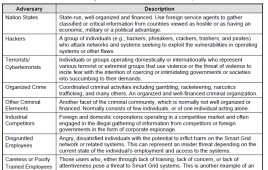
The National Institute of Standards and Technology (NIST) has finalized its initial set of smart grid cyber security guidelines. Issued as NIST’s Guidelines for Smart Grid Cyber Security (NISTIR7628), the document includes high-level security requirements, a framework for assessing risks, an evaluation of privacy issues in personal residences, and other information for organizations to use to protect the modernizing power grid from attacks, malicious code, cascading errors, and other threats.
It is the product of two formal public reviews and the focus of numerous workshops and teleconferences over the past 17 months. The three-volume set of guidelines (577 pages) is intended to facilitate organization-specific smart grid cyber security strategies focused on prevention, detection, response, and recovery.
“As we modernize the nation’s electric infrastructure to make it smarter, more efficient, and more capable, we need to make it more secure from end to end,” says U.S. Commerce Secretary Gary Locke. “These new cyber security guidelines will help government and industry meet this important responsibility.”
“The development of common smart grid standards is a national priority, and these cyber security guidelines are an important step toward that goal,” says U.S Energy Secretary Steven Chu. “If we are to truly modernize our electrical grid, we must have electricity producers, distributors, and consumers all speaking the same language and all working together to make our grid more secure. Cyber security is an integral part of the grid.”
The new report was prepared by the Cyber Security Working Group (CSWG) of the Smart Grid Interoperability Panel, a public-private partnership launched by NIST with American Recovery and Reinvestment Act funding from the Department of Energy. The guidelines are the second major output of NIST-coordinated efforts to identify and develop standards needed to convert the nation’s aging electric grid into an advanced, digital infrastructure with two-way capabilities for communicating information, controlling equipment, and distributing energy.
Access Guidelines for Smart Grid Cyber Security (NISTIR 7628) here: http://csrc.nist.gov/publications/PubsNISTIRs.html#NIST-IR-7628
Purchase of SCADA tech puts smart grid in reach
July 28, 2010 by KRemington
Filed under Utility Grid
CG Automation, a subsidiary of MSE Power Systems Inc., has acquired ADMS Wind SCADA and wind-turbine-monitoring systems from Second Wind Systems Inc. Combining SCADA with its expertise in utility automation, MSE Power Systems and CG Automation can offer more reliable, interconnections for smart-grid designs.
CG Automation provides automation products and systems to electric utilities and renewable-energy industries. Ownership of Second Wind’s systems complement CG Automation’s portfolio and broadens its services to the renewable energy market. “Combining Second Wind’s ADMS with our XCell Substation Automation products and services will let CG Automation provide wind farm management and interoperability,” said CG Automation CEO Sam Sciacca. “We also see potential applications for this technology in the solar market.”
MSE Power Systems
A-star and four industry players to develop smart-grid equipment
July 28, 2010 by KRemington
Filed under Utility Grid, Wind Power Projects
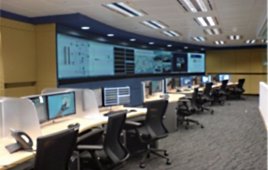
Groundbreaking began for the Experimental Power Grid Center (EPGC) on Jurong Island, Singapore, for an R&D facility that will function as a laboratory for smart-grid tech. Four companies – Rolls Royce, Vestas, SP PowerGrid, and CEI Contract Manufacturing – have partnered with the Agency for Science, Technology, and Research (A-Star) to develop smart grid and distributed energy solutions.
Equipment and devices jointly developed will form key components of an intelligent grid system. “Smart grid R&D is critical to transforming Singapore into a smart energy economy and the Center is important infrastructure that will bring us a step closer to realizing an intelligent national energy grid,” says Lim Chuan Poh, Chairman, A-STAR. “Innovation and development of energy technologies are vital to the growth of the global smart grid industry, which is expected to be worth $187 billion by 2015.
The center will accommodate a range of R&D activities in areas such as intelligent grids, integration of renewable power generation and vehicle to grid systems, and the development of new generation energy management systems. When completed in 2011, it will be the first experimental smart grid research facility of its kind in Southeast Asia.
DOE selects partners for $178M smart grid demo
May 2, 2010 by Paul Dvorak
Filed under Policy
The Department of Energy (DOE) selected a Pacific Northwest team including information services company 3TIER to conduct a regional smart-grid demonstration. The project will test new smart grid technologies including devices, software, and advanced analytical and forecasting tools that enhance the power grid’s reliability and performance. The Northwest study will involve more than 60,000 metered customers in Idaho, Montana, Oregon, Washington and Wyoming.
“Optimizing the energy supply-side of the smart grid equation, and renewable energy in particular, is absolutely critical to the long-term success of an efficient and smart national grid,” says 3TIER CEO Kenneth Westrick.
His company will provide wind and solar power forecasting for individual sites and for the region during the project. The company’s hour, day, and week ahead forecasts will be processed centrally as part of an integrated smart grid system. 3TIER is one of the largest forecasters of wind energy in the world, forecasting production for more than 16.5 GW of regional and 11.6 GW of project-specific installed capacity, including more than 30% of the installed capacity in North America.
“A key objective of a national smart grid infrastructure is to make the best possible use of renewable energy resources,” says Westrick. “Accurately forecasting weather-driven renewable energy provides signals the system needs to optimally integrate that energy into the grid, and dispatch other assets when production decreases. It is an essential component of an efficient and reliable smart grid system.”
The Pacific Northwest Smart Grid Demonstration Project team combines energy providers, utilities, technology companies, and other research organizations. Total estimated cost for the project is $178 million. The DOE will provide half the funding through the American Recovery and Reinvestment Act. The project’s participants, primarily utilities, and industry team members including 3TIER, will provide the remaining funds. At its peak, the project could create about 1,500 total jobs in manufacturing, installation and operating smart grid equipment, telecommunications networks, software, and controls in the five states.