
Editor’s note: This report is from the National Center for Policy Analysis
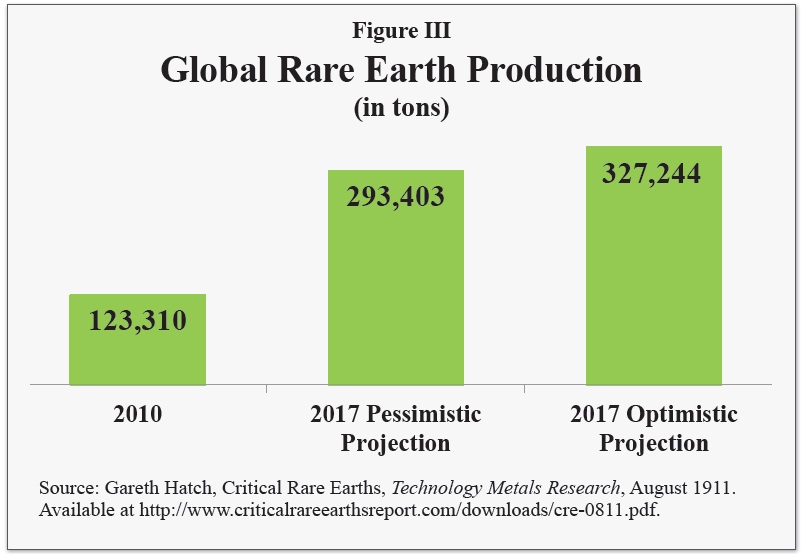
The U.S. could add jobs and strengthen national security by developing rare earth mining domestically and in other countries to break China’s 97% monopoly on the global supply of these critical minerals, according to a new report from the National Center for Policy Analysis (NCPA).
Rare earth deposits exist all over the globe but China is the only country that is actively mining and exporting any significant amounts. Even so, China has raised prices and cut back on export amounts, exacerbating rare earth shortages and expenses for the U.S.
“The immediate challenge is getting access to alternate sources of rare earths,” said NCPA Senior Fellow H. Sterling Burnett. “It takes the United States five times as long as other countries to get a permit and get a mine brought online. What takes two years in Canada takes more like ten years here due to restrictive regulation policies and differing jurisdictions for multiple agencies.”
Rare earths are key components of green energy technology, such as solar cells, wind turbines, and energy efficient lighting products. They are also crucial for manufacture of aircraft, lasers, X-Ray units and a spectrum of defense technologies.
Many countries and international companies have begun to seek alternative supplies, including new mines. Though reliable data for rare earth operations outside of China are lacking, the report finds that the most likely sources are five mines, one of which is California’s Mountain Pass, the only mine in America dedicated to rare earths. Molycorp, the owner, will mine only a handful of rare earth minerals, but it hopes to produce 20,000 tons per year by year end. By contrast, China produced 124,000 tons of rare earths in 2009.
NCPA
www.ncpa.org
Filed Under: Uncategorized



Without rare earth magnets, generators for direct drive wind turbines above a megawatt or two would be too large to be practical. Generators for geared wind turbines of any rating, medium or high speed, do not require rare earth magnets. There are several other reasons that the market for direct drive turbines is small, and will remain so. Other industries may suffer from a shortage of rare earths, but the wind power industry can do without them.