Windpower Engineering & Development

  • Home
  • Articles
    • Most recent posts
    • News
    • Featured
  • Resources
    • Digital issues
    • Podcasts
    • Suppliers
    • Webinars
    • Events
  • Videos
  • 2025 Leadership
    • 2024 Winners
    • 2023 Winners
    • 2022 Winners
  • Magazine
  • Advertise
  • Subscribe

How clean is oil in the turbine? Monitor tells

By Paul Dvorak | July 7, 2009

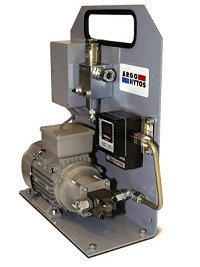
Data from the Argo-Hytos OPCom monitor can also be read out from a standard integrated memory with a real-time clock. The monitor allows continuous measurements of oil cleanliness in gear boxes and applications where the oil is highly aerated.

Data from the Argo-Hytos OPCom monitor can also be read out from a standard integrated memory with a real-time clock. The monitor allows continuous measurements of oil cleanliness in gear boxes and applications where the oil is highly aerated.

Operators of hydraulic and lubrication equipment are paying more attention to oil contamination. On the one hand, more value is being placed on well-thought-out, high grade filters. And on the other hand, more attention is being paid to monitoring the oil’s cleanliness. In the case of high-value machinery, such as a gearbox up in a turbine nacelle, the trend is away from periodic checks on oil quality to a system of on-line monitoring. A benefit of continuous monitoring is that system changes are immediately displayed.

Early evidence of emerging faults let maintenance personnel repair or purchase of spare parts in good time. This usually leads to substantial cost savings.

Until now it has not been possible to carry out on-line monitoring of oil contamination in gearboxes because when gear splash lube oil it mixes with a high proportion of air. Automatic particle counters measure the air as if it were solid particles, giving false results. In the case of high value or inaccessible gearboxes, as they would be in offshore wind turbines, the need for on-line monitoring is especially acute.

Argo-Hytos’ OPCom Bubble Suppression module includes a particle counter, pump, and pressure relief valve that monitors transmission oil for its cleanliness on an on-line basis. The pump with pressure-relief valve forces oil through the particle monitor at high pressure. Air bubbles are so compressed they do not affect the measurement. Data is transferred several ways. A serial interface RS232 is standard while optional methods include analogue outputs of 0 to 5 V, RS-485, and a query via GSM modem.


Filed Under: Components, Hydraulics
Tagged With: bubble suppression, oil maintenance, oil monitoring
 

About The Author

Paul Dvorak

Related Articles Read More >

ZX Lidars achieves world’s first 21-200 m Lidar IEC Classification
Turbine bearing supplier Malloy completes warehouse expansion
South Fork Wind’s first installed turbine delivers power to Long Island
Cabling completed on Vineyard Wind 1 offshore project

Podcasts

Wind Spotlight: Looking back at a year of Thrive with ZF Wind Power
See More >

Windpower Engineering & Development Digital Edition Archive

Digital Edition

Explore the full archive of digital issues of Windpower Engineering & Development, presented in a high-quality, user-friendly format. Access current and past editions, clip, share, and download valuable content from the industry’s leading wind power engineering resource.

Windpower Engineering & Development
  • Wind Articles
  • Solar Power World
  • Subscribe to Windpower Engineering
  • About Us/Contact Us

Copyright © 2025 WTWH Media LLC. All Rights Reserved. The material on this site may not be reproduced, distributed, transmitted, cached or otherwise used, except with the prior written permission of WTWH Media
Privacy Policy | Advertising

Search Windpower Engineering & Development

  • Home
  • Articles
    • Most recent posts
    • News
    • Featured
  • Resources
    • Digital issues
    • Podcasts
    • Suppliers
    • Webinars
    • Events
  • Videos
  • 2025 Leadership
    • 2024 Winners
    • 2023 Winners
    • 2022 Winners
  • Magazine
  • Advertise
  • Subscribe