University of Maine Hosts International Industry Roadmapping Summit To Advance U.S. and Global Floating Offshore Wind Development, in Honor of Late Matthew R. Simmons
Earlier in October, the University of Maine hosted the inaugural “Matthew R. Simmons Memorial Summit: A Technology Roadmap for Floating Offshore Wind.” The summit gathered information from various perspectives of platform designers, researchers, turbine OEMs, permitting agencies, and developers with the goal of producing a roadmap that advances the floating offshore wind.
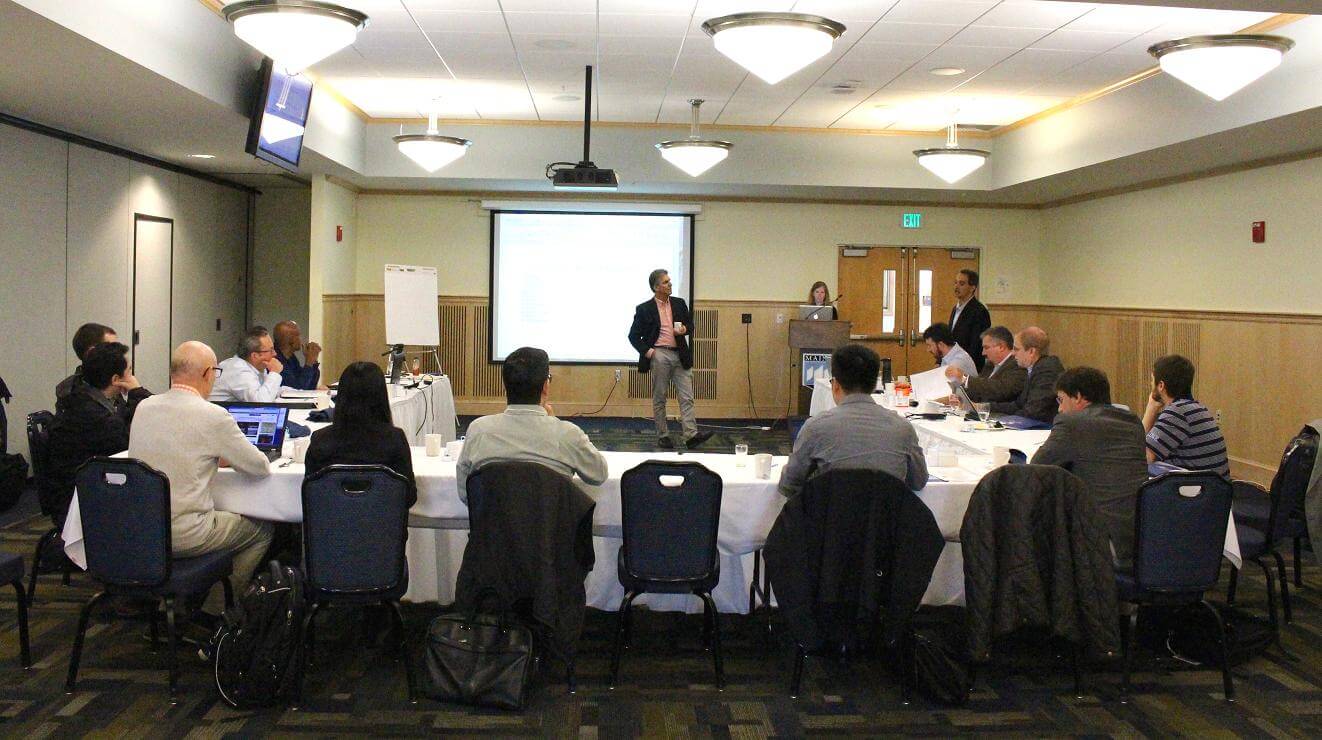
On the second day of the summit, the group was broken into two sessions, Technology Gaps and Pathways to Commercial Projects. The Technology Gaps breakout session, pictured, was facilitated by Walt Musial and Dr. Amy Robertson of
NREL.
The summit was named in honor of the late Matthew R. Simmons, an investment banker, author, and energy advisor to President George W. Bush, who founded Simmons & Company International, one of the largest independent investment banks in the energy industry, and later founded the Ocean Energy Institute to promote renewables development. Simmons was one of the earliest advocates for the development of all forms of renewable ocean energy.
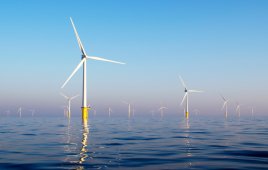
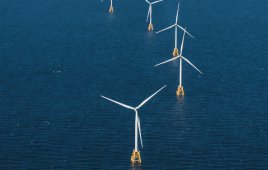
In the US, more than 60% of the offshore wind resource within 50 miles of the coast is in deep waters where fixed bottom foundations are not economically feasible, and where floating foundations are potentially more appropriate. Floating wind farms can be positioned beyond the horizon (i.e. > 20 miles from shore) to address visual impact, and can be placed farther offshore where the wind resource is typically more favorable. Hulls can be fabricated dock-side and towed out and moored to the seabed, which reduces construction vessel needs and heavy equipment costs.
Prof. Habib Dagher, who hosted the summit at UMaine, explained: “The objective of this Summit was to advance floating offshore wind technology by bringing together a select but diverse group of leading stakeholders and even competitors involved in the development of the technology. The group covered key aspects of floating wind technology, including project development and financing, engineering, permitting, and construction. They heard about challenges and opportunities from one another and started to formulate a plan to move the floating wind industry forward. The group will author and release its first floating offshore wind turbine roadmapping report in early 2016, and continue to work together and meet every two years.”
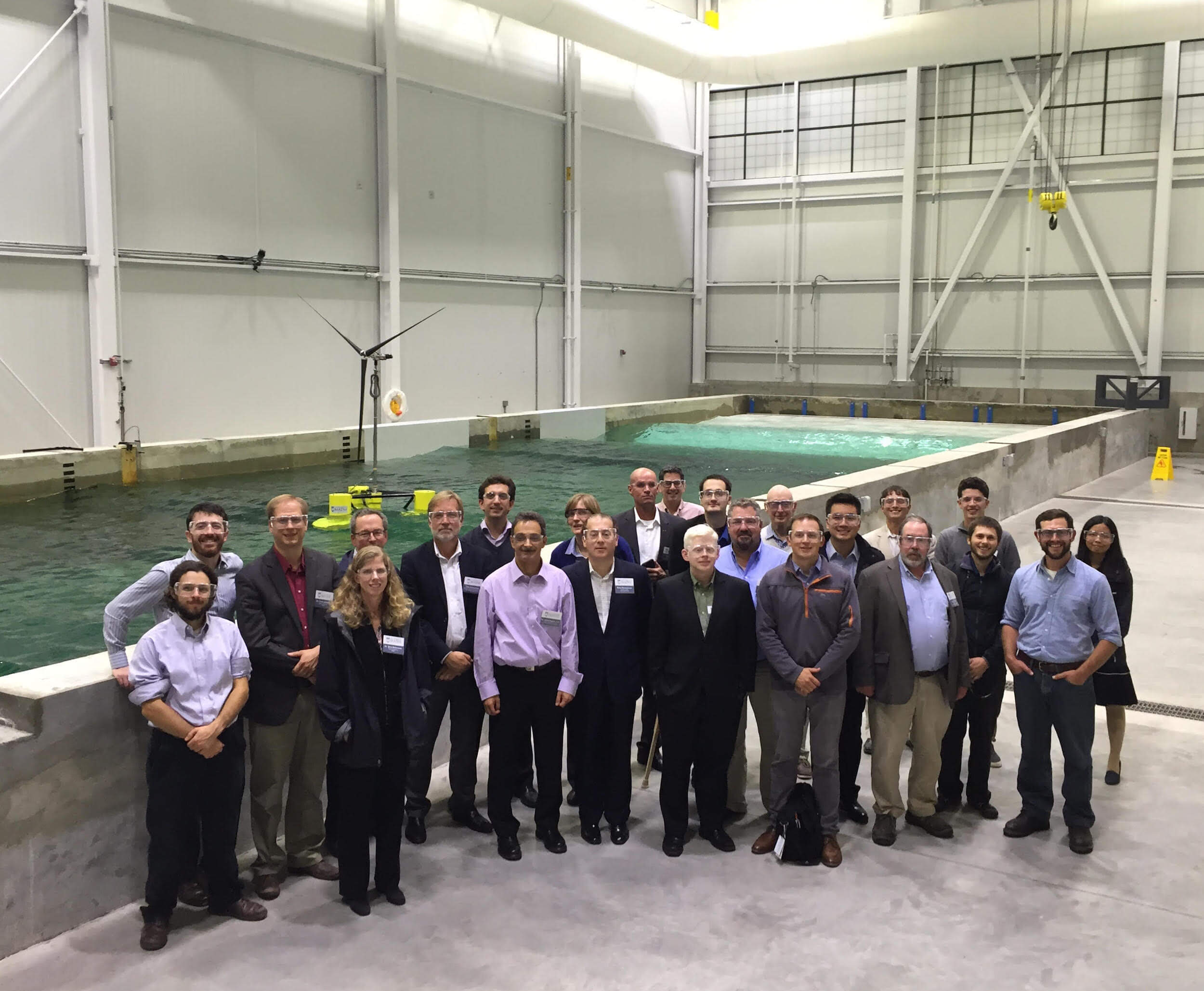
Attendees of the “Matthew R. Simmons Memorial Summit: A Technology Roadmap for
Floating Offshore Wind,” at the University of Maine Advanced
Structures and Composites Center on Oct 1, 2015.
To allow for substantial exchange, the Summit attendance was capped to approximately 25 invited leaders in floating offshore wind technology, including individuals from the US National Renewable Energy Lab (NREL), U.K. Carbon Trust, U.S. Department of the Interior Bureau of Ocean Energy Management (BOEM), Alstom Power, Principle Power, The Glosten Associates, BVG Associates, Green Sail Energy, American Bureau of Shipping (ABS), UMass Amherst, the University of Maine, and other leading institutions.
Henrik Stiesdel, who until recently served as Chief Technology Officer of Siemens Wind Power, gave the summit’s opening keynote address. Mr. Stiesdal stressed the importance of industrializing the hull production to drive costs out, and showed examples and ideas of how this may be accomplished. A second keynote by Walt Musial, Manager of Offshore Wind and Ocean Power Systems at the NREL followed. Mr. Musial identified specific technology areas that can drive costs out including lightweighting, and possibly turbines design specifically for floating offshore applications. Attendees each presented on current challenges and needs in areas including: design tools, numerical models, and model testing; full-scale demonstration projects; economics, metocean data, and controls; developers’ challenges, codes, and permitting and policy. The first day of the summit closed with a keynote address by Doug Boren and Maurice Sid Falk of the U.S. Department of Interior’s Bureau of Ocean Energy Management, who focused on the unique permitting challenges and opportunities specifically related to floating offshore wind.
“I thoroughly enjoyed the opportunity to meet with key players within the floating offshore wind community. It was a perfect setting for a qualified discussion of concepts and methods. Regarding the potential for a quantum-leap on cooperation and dissemination, this was a truly ground-breaking event”, said Henrik Stiesdal, former CTO of Siemens Wind Power.
“Now is the time for the industry to team up to overcome common challenges, prove economical feasibly, and bring floating offshore wind from conception to a commercial reality. Being involved in the first global discussion with world leaders defining the roadmap for this technology will enable us to define the key milestones that need to be targeted going forward to ensure the technology success,” Marc Costa Ros, Senior Manager at The Carbon Trust in London, UK, noted during his presentation.
On the second day, participants were divided into two breakout sessions of “Technology Gaps,” and, “Pathways to Commercialization.” In early 2016, a public document co-authored and peer-reviewed by attendees, entitled “A Technology Roadmap for Floating Offshore Wind” will be issued and serve as a resource to governments, policy makers and funding agencies.
“It was an honor to collaborate with the world’s experts on offshore deep water wind energy at this event, which was a milestone toward the development of a floating wind industry,” said Walt Musial, Manager Offshore Wind and Ocean Power Systems at the National Renewable Energy Lab. “The road to commercial offshore wind may very well end with economically competitive floating wind turbines. I expect that this effort will help set the course for the development of new a large scale industry which is now within our reach.”
To receive a notification when “A Technology Roadmap for Floating Offshore Wind,” is made available, sign up at:
http://composites.umaine.edu/contact-us/subscribe-to-news/
To become involved in the groups’ roadmapping activities, please
visit: http://composites.umaine.edu/request-to-participate/
About UMaine Composites Center (www.composites.umaine.edu)
The University of Maine’s Advanced Structures and Composites Center’s
award winning research staff help clients create innovations from concept through design, modeling, prototyping, testing, and code compliance reporting. The 9,300 m2, $110 million, ISO 17025-accredited laboratory has a successful history of partnering with industry, completing over 500 product development and testing projects over the past five years.
Filed Under: News, Offshore wind