
Powin Energy, a designer and developer of safe and scalable energy storage solutions for utilities, C&I, and EV fast-charging stations, says its Battery Pack Operating System(bp-OS) has been awarded United States Patent and Trademark office patent number US20140015469 A1. Their invention is a battery management system for distributed energy storage systems and associated applications.
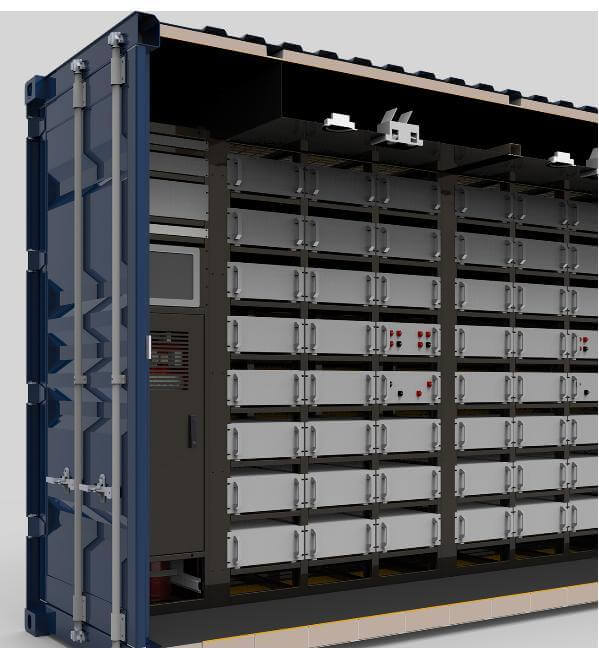
The patented bp-OS uses an algorithm to actively and passively balance batteries down to the cell level, enabling the minimization of voltage differentials across all battery cells over the system’s lifetime.
The patented bp-OS utilizes a unique algorithm to actively and passively balance batteries down to the cell level, enabling the minimization of voltage differentials across all battery cells over the system’s lifetime. The bp-OS also delivers unprecedented visibility into battery health through real-time battery monitoring, state-of-charge management, and detailed diagnostics to ensure safety, optimize performance, and extend the operational lifetime of batteries used in stationary storage systems and EV fast-charging systems.
“We’re focused on creating the safest and most technologically advanced energy storage unit and battery management software in the world,” said Virgil Beaston, Chief Technology Officer of Powin Energy. “Using Powin Energy’s bp-OS that is made specifically for the needs of the energy storage industry, battery system owners and operators will unlock new levels of insight into the use of their batteries, have access to higher optimization schemes, and see noticeable increases in the total lifecycle value of their storage systems.”
Powin Energy’s bp-OS also features two industry firsts – the Battery Odometer and the Warranty Tracker. The Battery Odometer measures capacity degradation and calculates remaining battery lifetime by keeping track of voltage, temperature, state-of-charge, charge and discharge times, and other critical data for every cycle of the battery. The Warranty Tracker maximizes operational uptime and prevents potential economic losses by alerting operators to possible issues, isolating problem zones, automatically filing warranty claims, and avoiding full-system shutdowns. These two integral features of Powin Energy’s bp-OS make lithium-ion batteries safer and more efficient by preventing them from overcharging or undercharging, avoiding costly unplanned outages, and extending battery life by reducing capacity fade.
The bp-OS is installed standard in all of Powin Energy’s Battery Energy Storage Systems (BESS), making it the only one on the market today that gives its customers multi-layer visibility into the health of their energy storage system down to the cell level. Powin Energy’s storage system is scalable to meet the demands of any size project from creating a localized microgrid to providing peak demand management and grid support services for utilities. Powin’s bp-OS is compatible with all leading energy storage chemistries.
The BESS system is a self-contained 125 or 250 kWh modular shipping container that can be scaled to service projects that are multiple megawatts in size. BESS units are less than 20-ft long, giving the system a modest footprint. A rolling chassis-mountable option with dual ac and dc connections give the BESS the ability to be transported easily between sites and interconnected quickly (after appropriate siting and permitting).
Powin Energy’s BESS has been implemented in a wide-range of projects in numerous operating environments. Clients include: the Bonneville Power Administration (BPA), the United States Department of Energy’s Pacific Northwest National Laboratory (PNNL), the Oregon Department of Energy (ODOE), and the United States Department of Energy Office of Electricity (US DOE-OE).
Filed Under: Energy storage, News